
How Much DJ Setup Time Does Your Event Need?

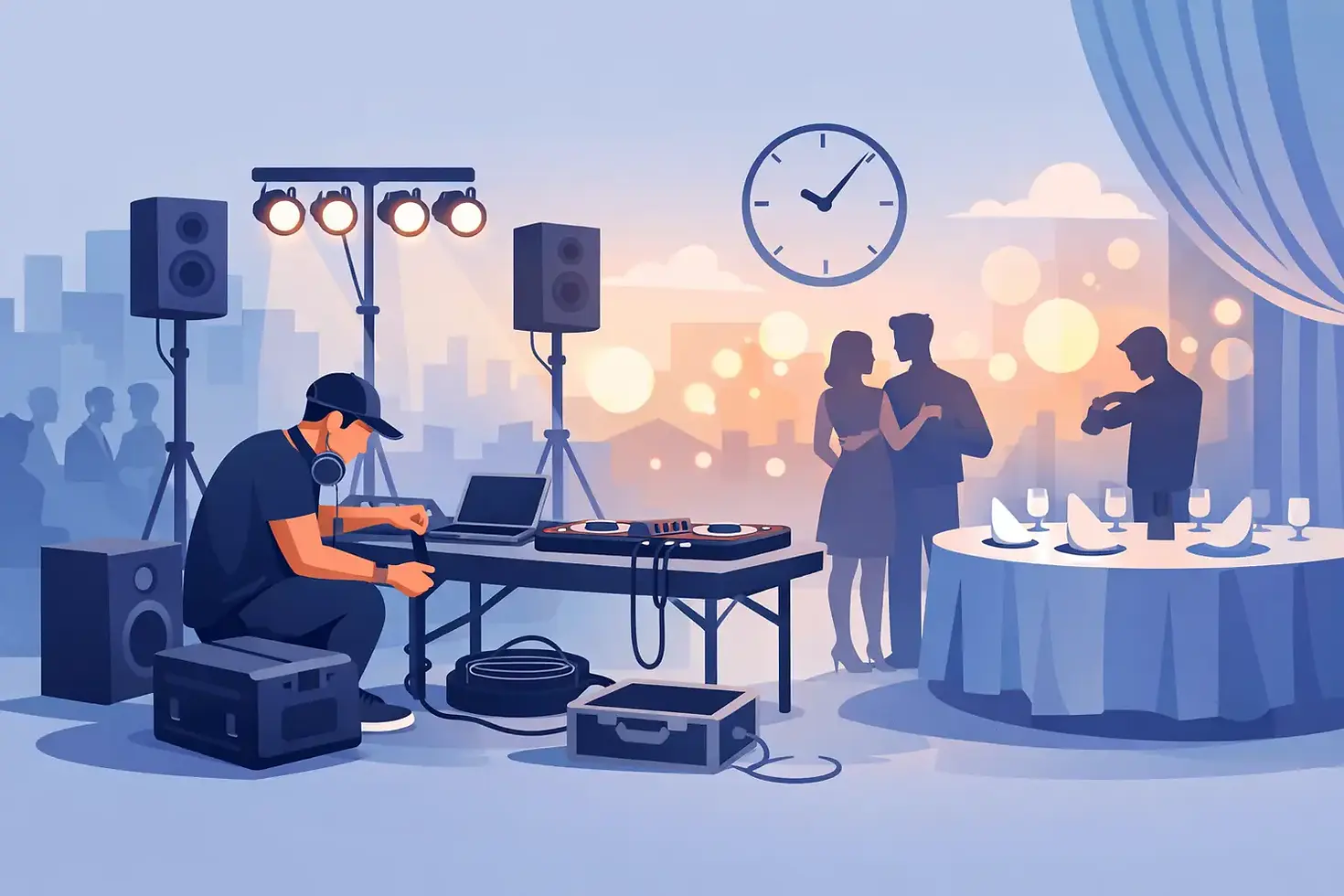
A ballroom can look perfectly composed at 3:00 p.m. and feel entirely different by 6:00 p.m., once florals are placed, candles are lit, guests begin arriving, and the first notes of the evening fill the room. DJ setup time is the quiet space that makes that transformation possible. It is not simply an equipment window. It is the behind-the-scenes preparation that protects the atmosphere you have spent months imagining.
For weddings, galas, corporate celebrations, and private events, entertainment should feel effortless to guests. That ease is carefully built through advance planning, a thoughtful load-in, intentional sound placement, lighting design, and enough time to test every detail before the room comes to life.
Why DJ Setup Time Matters to the Guest Experience
The best event production is often the part no one notices. Guests should not see a DJ rushing cables across a cocktail-hour pathway, hear a microphone checked during family portraits, or watch a lighting display come together as they enter the reception. They should walk into an atmosphere that already feels complete.
A proper setup window gives your entertainment team time to create a polished visual presentation while making practical decisions that support the room. Where should speakers sit so the dance floor feels energetic without overwhelming dinner conversation? How can lighting flatter the space, the décor, and the people in it? Which entrance allows equipment to arrive discreetly? These answers depend on the venue, floor plan, guest count, and event flow.
For a wedding, this preparation also preserves emotional moments. A ceremony processional deserves clear, balanced sound. Toasts should be warm and intelligible from every seat. Your first dance should begin precisely when you are ready, not when a final cable has been connected. The technical work may be invisible, but the confidence it creates is felt throughout the night.
How Much DJ Setup Time Is Typical?
Most refined event setups benefit from approximately 90 minutes to two hours of dedicated onsite preparation. This allows for a professional load-in, equipment placement, sound checks, lighting adjustments, and a final review with the planner or venue team. More elaborate productions may require additional time.
The right amount of DJ setup time depends on what your celebration asks the entertainment team to do. A single reception space with a straightforward sound system may be ready more quickly than a wedding with separate ceremony, cocktail hour, and reception locations. A gala with branded visuals, formal presentations, multiple wireless microphones, or a tightly choreographed program also deserves a longer production window.
The key distinction is between arrival time and setup time. A DJ may arrive well before the stated setup period begins, especially when parking, elevators, security check-in, or a long walk from the loading area are involved. Venues often have specific rules around access, power, noise, and when vendors may enter the event space. Building those realities into the schedule prevents small logistics from becoming visible stress.
A simple reception versus a layered celebration
For an elegant reception in one room, the setup may include a DJ facade or styled booth, speakers, dance-floor lighting, wireless microphones, and a curated music environment for dinner and dancing. Even when the final look is understated, each element needs to be placed with care and checked before guests arrive.
A layered celebration may involve ceremony audio in one location, cocktail-hour music in another, and a full reception setup elsewhere. It may also include specialty lighting, extra microphones for a wedding party or executive team, audiovisual support for speeches, or a room reveal timed to a specific moment. In these cases, the entertainment plan needs to work alongside catering, florals, rentals, photography, and venue operations. Additional setup time is not excess. It is what allows each moving piece to feel coordinated.
The Details That Can Change Your DJ Setup Time
Every venue has its own rhythm. A ground-floor ballroom with nearby parking creates a different production experience than a historic estate, a rooftop venue, or a country club with limited vendor access. Before finalizing your timeline, consider the factors that influence the day.
Venue access and load-in: Stairs, elevators, long hallways, narrow doors, parking restrictions, and security procedures can all extend arrival logistics.
Multiple event locations: Separate ceremony, cocktail hour, and reception spaces may require additional equipment, staffing, and coordination.
Lighting and room design: Uplighting, dance-floor effects, monograms, and other atmosphere-enhancing elements need time for placement and programming.
Audio needs: Live musicians, officiants, speeches, presentations, and video playback can add microphones, connections, and sound checks.
Vendor timing: Florists, rental teams, photographers, planners, and caterers may all need access to the same space during a narrow window.
Power is another detail worth discussing early. A professional entertainment team will identify appropriate power access and avoid creating visual clutter or unnecessary disruption. In an outdoor setting, weather protection, terrain, and power availability require even more forethought. A beautiful tented celebration can be spectacular, but it calls for a clear production plan well before event day.
Building DJ Setup Time Into Your Timeline
The most graceful timelines leave room for real life. Traffic happens. A venue may release the room later than expected. A rental delivery may overlap with entertainment load-in. Giving your DJ a realistic window means these ordinary variables do not interfere with your guests’ first impression.
Start by asking your venue when your entertainment team can access the space, not simply when the event begins. Then share the full event schedule with your DJ and planner, including ceremony start time, guest arrival, cocktail hour, room flips, dinner service, speeches, formal dances, and the final song. This context allows the music, lighting, and announcements to support the entire arc of the celebration.
If your venue cannot offer early access, there are still solutions. Some events call for a partial setup in a discreet area, a staged load-in during cocktail hour, or a separate team member to prepare a second location. The trade-off is that limited access can restrict what is possible visually or require a more streamlined production approach. A trusted DJ will be candid about those options and help you choose the one that protects your priorities.
A note for planners and hosts
For planners, DJ setup time is most effective when it is included in the production schedule from the beginning, alongside lighting, rentals, and audiovisual needs. For couples and private hosts, it is one more reason to bring your entertainment partner into the conversation early. The earlier the team understands your venue and vision, the more naturally the experience can take shape.
At Willow Sound Co., the goal is never to fill a room with sound for its own sake. It is to create the right feeling at the right moment, from the anticipation before guests enter to the last song that keeps them lingering together. That level of intention begins long before the dance floor opens.
What a Thoughtful Setup Makes Possible
When the setup is properly paced, your DJ can focus on more than getting ready. There is time to refine the volume for the room, walk through key transitions, confirm pronunciation for introductions, coordinate cues with your planner, and ensure the lighting feels harmonious with the evening’s design. There is room for details that are easy to overlook but deeply felt.
It also gives you the freedom to be present. You should be enjoying a quiet moment before the ceremony, greeting guests at a corporate reception, or finishing photographs with the people you love. You should not be answering urgent questions about outlet locations or speaker placement in formalwear.
A well-planned setup is an act of hospitality. It respects the venue, supports the vendor team, and gives guests a polished welcome. Most of all, it creates the calm foundation for a celebration that feels personal, effortless, and entirely yours. When the room is ready before the first guest arrives, the magic has already begun.


Comments